
#8 Tell Your Story
Everyone has a story. Be proud and tell it!
Steve Steele
6/22/20265 min read
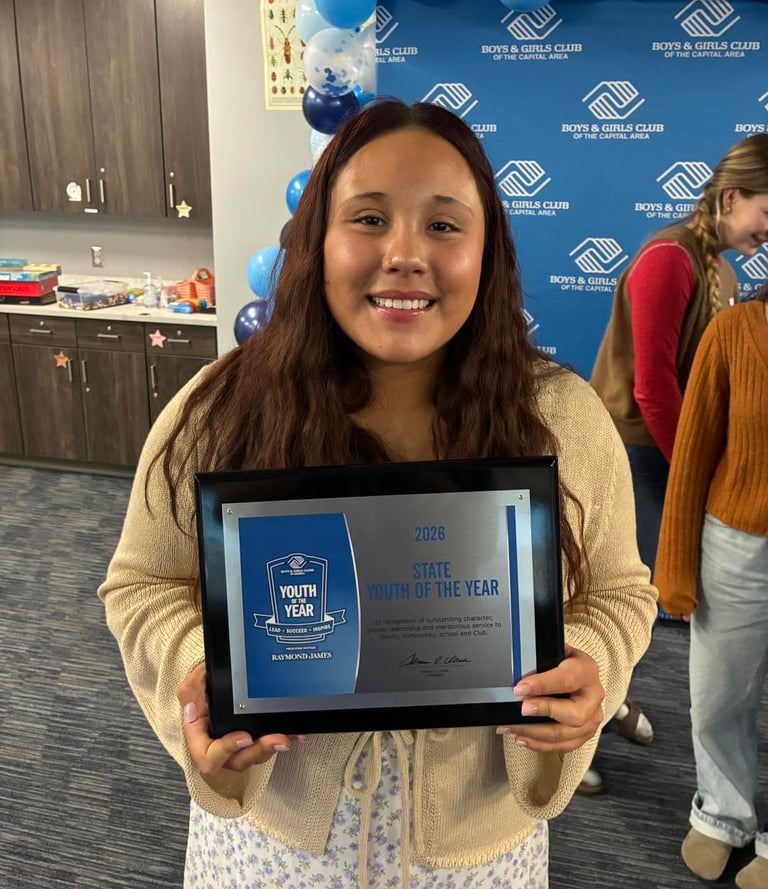
Ever read someone's story and think, "This is exactly what I needed to hear today"? Your story will do that for someone else.
- Kelly McNelis
Today begins a very special week. Tomorrow I will head to Chicago to accompany our first ever South Dakota Youth of the Year Winner, Xoe. She will be competing in the regional competition in Chicago put on by the Boys & Girls Clubs of America. The Midwest Competition will see Xoe and 12 other state-level winners give 3-minute speeches and interview with a panel of judges to earn the right to represent the Midwest region at the National competition this fall. The candidates also wrote essays that will be included in the judging process. It is an impressive event, as ALL of the nominees are incredible young men and women who each have their own unique, beautiful story. Xoe's story is every bit as good.
Xoe is an incredible employee at the Club. It has been so amazing watching her grow and develop as a leader. Seeing her grow throughout the Youth of the Year process has been just as enjoyable. In practicing for her speech and interviews, I have learned a lot about her story. I have heard her tell her speech to different groups in our community where she got some live reps in preparation for the competition this week. As with anything, she continually improves doing better with all of the fine details that go along with public speaking. My favorite part, however, from following her journey the last few months is more than just seeing her improve at the skill of public speaking.
During this time, I have gotten to hear about the impact she has had telling her story. From having conversations with audience members to getting messages and having people check-in on how she's doing has really demonstrated the power telling one's story can have. A wide range of people have commented on her story to me, people of various ages, races, genders, and background. Many have shared with me how powerful her story was and how much it changed their thinking. Effective story tellers (like Xoe) do not only transfer information. If that were where speeches ended, most wouldn't be MOMENTOUS. These people REMEMBERED her and the words she said, because it was genuine, and they felt it. Xoe's presence and ability to connect with her audience invited them to feel her story as she spoke.
I won't give away her story as it is hers to tell (but the Blog image of keys is all her imagery), but I will say that regardless of how the Midwest competition goes, she's already a winner, and she has a GREAT FUTURE ahead of her! If you see her today, wish her luck and pray for safe travels to and from the competition.
The Story You Almost Didn't Tell
There's a particular kind of courage in standing up and saying, "Here's what actually happened to me." Not the polished, conference-ready version but the real one, with the parts where you were scared, or wrong, or didn't see it coming. Most leaders are trained to project competence, to lead with the lesson rather than the mess that produced it. But the mess is exactly what people need to see. When you tell your story honestly, you give others permission to stop performing and start recognizing themselves in you.
This is what makes personal storytelling momentous rather than merely informative. A lesson tells someone what to think; a story lets them feel it alongside you, in real time, with all the uncertainty still intact. When you describe the moment you almost quit, or the decision you got wrong before you got it right, you're not just illustrating a principle, you're handing someone a mirror. They start thinking, if that happened to them and they made it through, maybe my version of this isn't disqualifying either. That shift, from shame to shared experience, is where real change in a room begins.
There's also something about specificity that abstraction can never deliver. "Resilience matters" is a slogan. "I sat in my car in the parking lot for twenty minutes before I could walk into that meeting" is a moment someone can actually hold onto. The details of the parking lot, the twenty minutes sifting through nerves are what make a story transferable. People don't remember your framework nearly as well as they remember the specific image of you, human and unguarded, doing the hard thing anyway. That image becomes a reference point they carry into their own hard moments.
Telling your story also redistributes power in a room, in a good way. Leaders who only ever appear polished create admiration (at a distance) but not connection, and definitely not courageousness. The moment you reveal a real struggle, you close that distance. You're no longer the example of what's possible only for exceptional people; you become evidence that the people in front of you are capable of the same thing, because you were ordinary in that moment too. That's often the real gift of the story: not the takeaway at the end, but the permission embedded in the telling.
Finally, your story becomes momentous for others precisely because it outlives the room you told it in. People carry stories forward and they retell them to their own teams, return to them in their own low moments, using them as a kind of internal compass. A well-told personal story can quietly do leadership work for years after you've forgotten you even told it. That's the deeper logic behind building moments deliberately into how you lead: a true story, told well, doesn't just communicate something. It becomes part of someone else's resource for facing what's next.
Through the process of being encouraged to write my own story (Thanks Ed), I have also discovered the therapeutic side of telling your story. Throughout my book Building the Empire there are many stories I discuss. Many of them go far beyond what most people would know and there are many difficult moments I openly discuss. There's something about letting out your past frustrations and baring your soul that is therapeutic. We all make many difficult decisions. In some positions (like being a Head Football Coach or CEO), those decisions can often get scrutinized by people who don't know you or your reasoning behind decisions. Being able to open up about some of those things was a great experience as I wrote Building the Empire. Sure, there are a lot of fun memories and some crazy stories from the years in there as well. The process was full-circle because almost every night I spent writing involved laughter, smiling, and tears, as well. Jim Valvano always said that if you could laugh, think, and be moved to tears; you had a full day. I will say that almost every time I sit down at my computer to write, I experience his thought process.
PARTING THOUGHTS
Think of one specific, unpolished moment from your own journey, not the lesson, but the raw scene itself. What's the detail (the place, the feeling, the hesitation) that makes it real? That detail is what you'll actually share.
Ask where you're still performing instead of revealing. Notice the next time you're tempted to lead with the polished version of a story. Pause and ask: what would it cost me to tell the messier, truer version instead. What might it give the people listening?
Tell one true story this week, on purpose. Don't wait for the perfect moment to share something vulnerable. Choose one conversation, one meeting, one team check-in, and bring a real story into it deliberately, with the specific details intact.
After you share a story, pay attention to what sticks with others. Maybe what phrase they repeat back, the moment they reference later. That's the signal for which of your stories are doing real leadership work, and worth telling again.